

Shingles could have more of an impact than you realize

Shingles is caused by the reactivation of the varicella zoster virus (VZV).

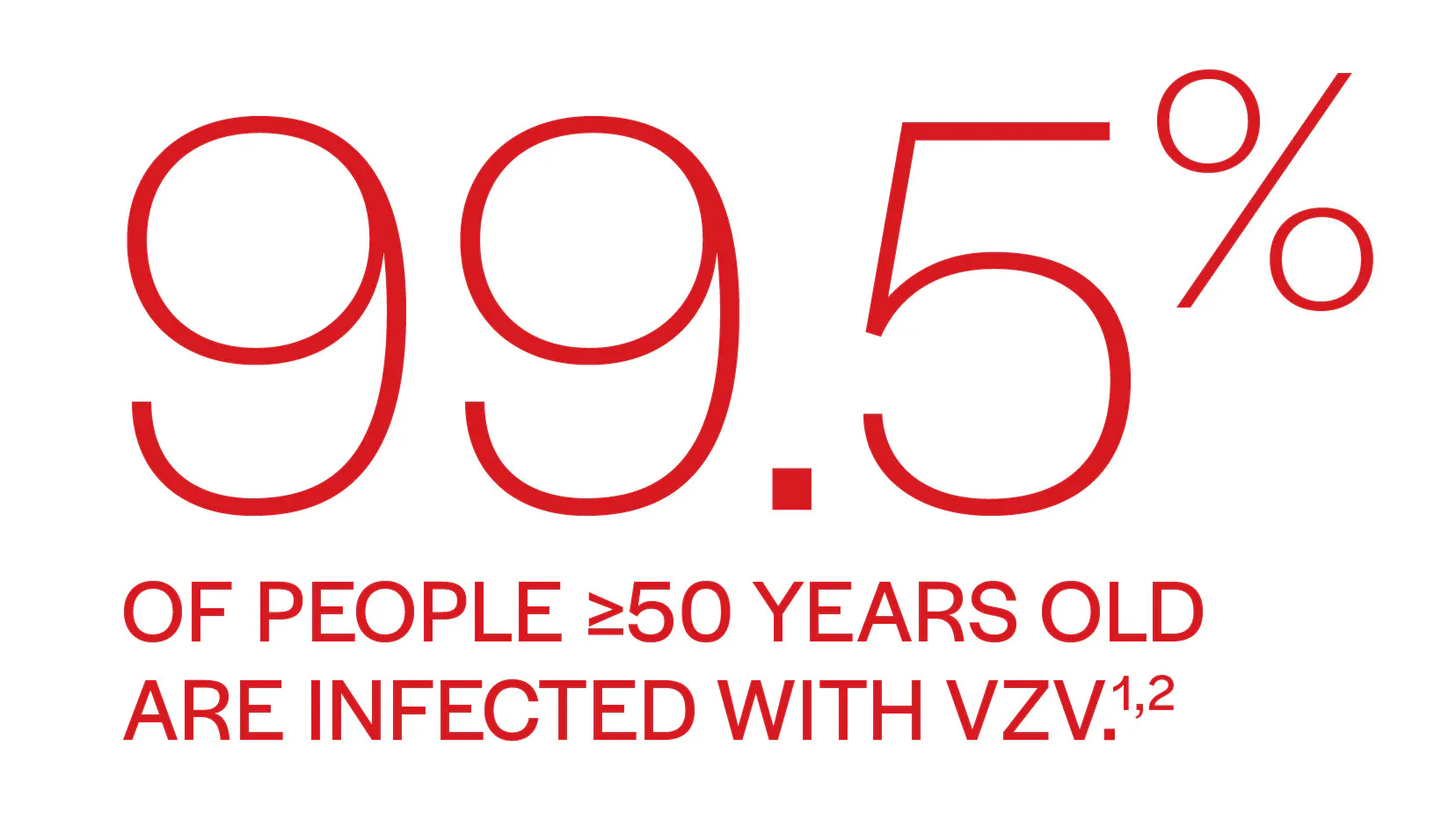
99.5 percent of people 50 years of age and older are infected with VZV

In 1 out of 3 people, the dormant virus reactivates in their lifetime and causes shingles.1

Shingles is a painful, itchy rash that develops on one side of the face or body, typically lasting 7 to 10 days.3

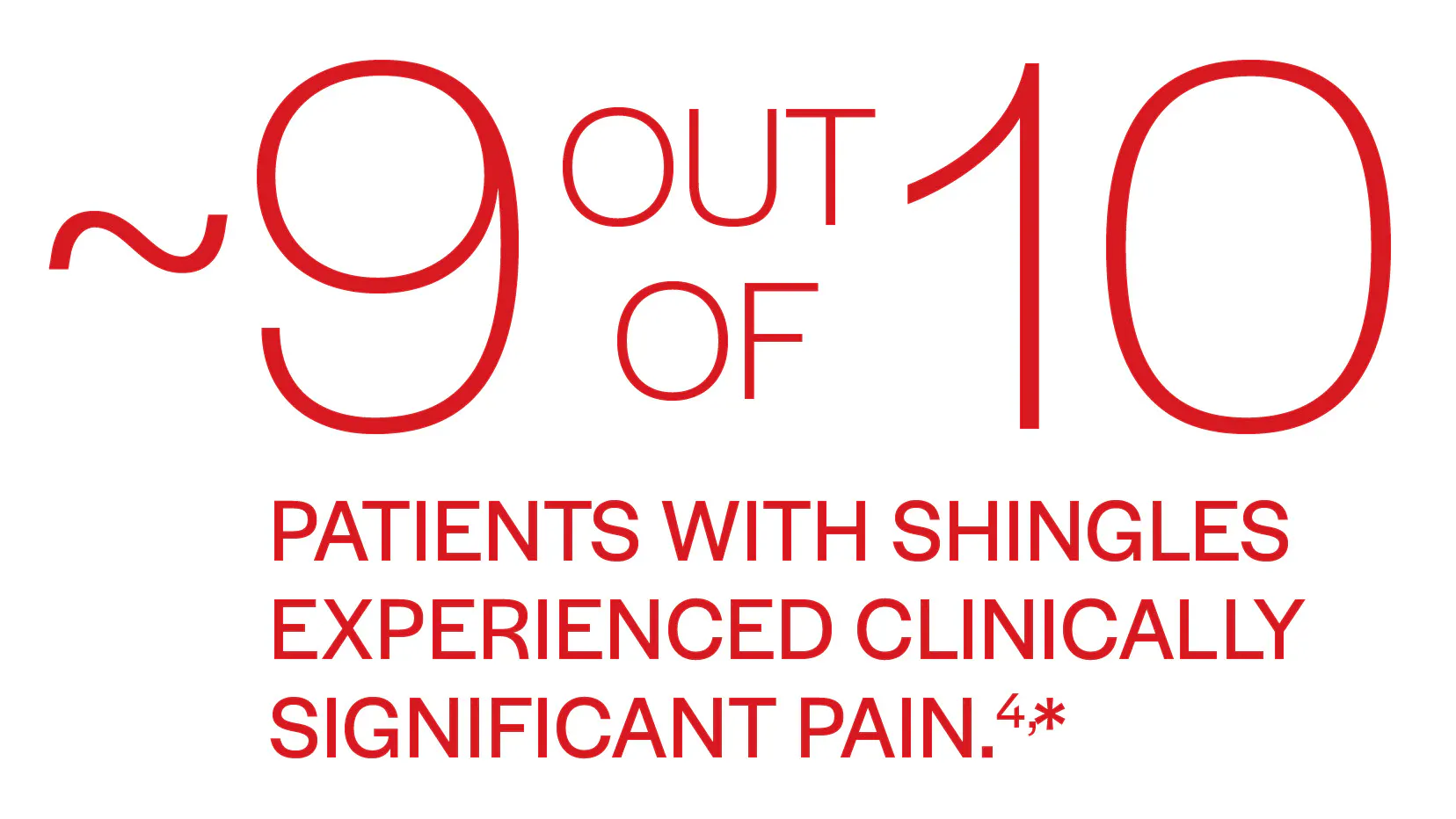
Approximately 9 out of 10 patients with shingles experienced clinically significant pain

Patients were asked to rate their “worst pain” on a scale of 0 to 10 using the Zoster Brief Pain Inventory (ZBPI). Clinically significant pain was defined as a score of 3 or greater.4

  • *

    Data from a post hoc analysis of 2 phase 3 trials (ZOE-50 and ZOE-70) of participants in the placebo groups with a confirmed case of shingles in adults ≥50 years old (n=280) and ≥70 years (n=240).4

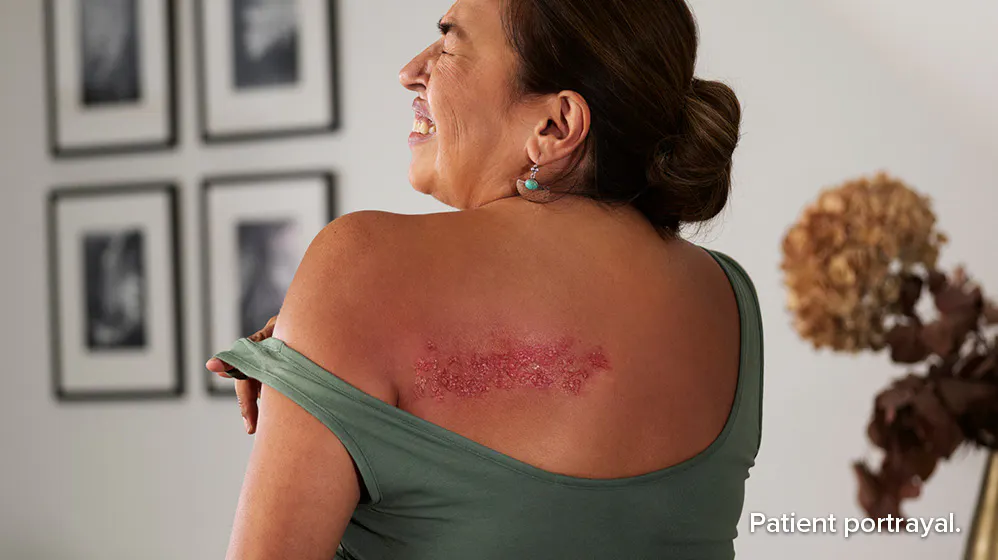
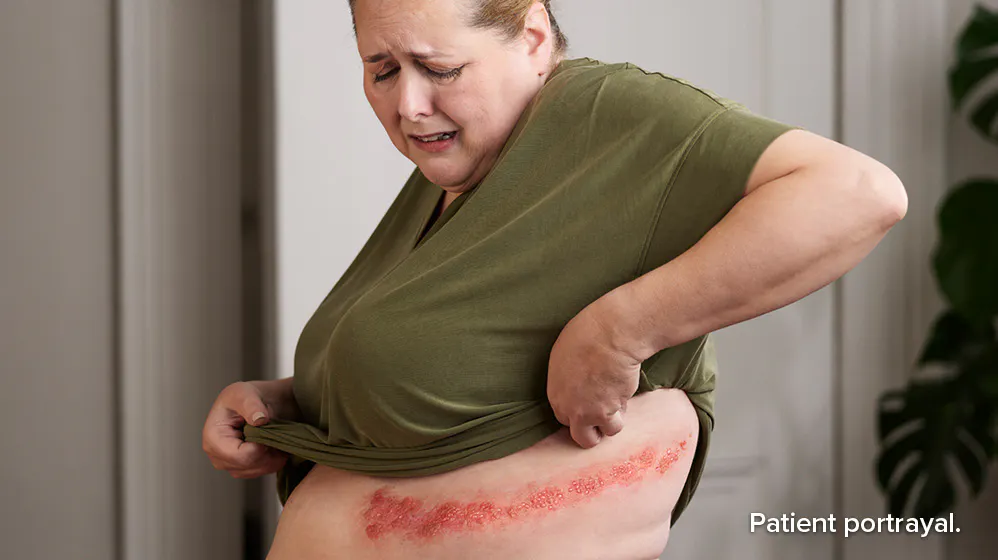
How patients describe shingles pain5

Patient portrayal: man with burning shingles pain

Burning

Patient portrayal: woman with stabbing shingles pain

Stabbing

Patient portrayal: woman with electric shocks shingles pain

Electric shocks

Dr Wasson: Exploring the potential impact of shingles

Hear key opinion leader, family medicine physician, and immunization medical director Dr. Brad Wasson discuss the impact and unpredictability of shingles among adults ≥50 years old.

COMPLICATIONS CAN BE SERIOUS

Learn about potential complications of shingles

Indication & Important Safety Info

Indication

Important Safety Information

Indication

SHINGRIX is a vaccine indicated for prevention of herpes zoster (HZ) (shingles):

  • in adults aged 50 years and older.
  • in adults aged 18 years and older who are or will be at increased risk of HZ due to immunodeficiency or immunosuppression caused by known disease or therapy.

SHINGRIX is not indicated for prevention of primary varicella infection (chickenpox).

Important Safety Information

  • SHINGRIX is contraindicated in anyone with a history of a severe allergic reaction (eg, anaphylaxis) to any component of the vaccine or after a previous dose of SHINGRIX
  • Review immunization history for possible vaccine sensitivity and previous vaccination-related adverse reactions. Appropriate medical treatment and supervision must be available to manage possible anaphylactic reactions following administration of SHINGRIX
  • In postmarketing observational studies, an increased risk of Guillain-Barré syndrome has been observed during the 42 days following vaccination with SHINGRIX
  • Syncope (fainting) can be associated with the administration of injectable vaccines, including SHINGRIX. Procedures should be in place to avoid falling injury and to restore cerebral perfusion following syncope
  • Solicited local adverse reactions reported in individuals aged 50 years and older were pain (78%), redness (38%), and swelling (26%)
  • Solicited general adverse reactions reported in individuals aged 50 years and older were myalgia (45%), fatigue (45%), headache (38%), shivering (27%), fever (21%), and gastrointestinal symptoms (17%)  
  • Solicited local adverse reactions reported in autologous hematopoietic stem cell transplant recipients (aged 18 to 49 and ≥50 years of age) were pain (88% and 83%), redness (30% and 35%), and swelling (21% and 18%)  
  • Solicited general adverse reactions reported in autologous hematopoietic stem cell transplant recipients (aged 18 to 49 and ≥50 years of age) were fatigue (64% and 54%), myalgia (58% and 52%), headache (44% and 30%), gastrointestinal symptoms (21% and 28%), shivering (31% and 25%), and fever (28% and 18%)
  • The data are insufficient to establish if there is vaccine-associated risk with SHINGRIX in pregnant women
  • It is not known whether SHINGRIX is excreted in human milk. Data are not available to assess the effects of SHINGRIX on the breastfed infant or on milk production/excretion
  • Vaccination with SHINGRIX may not result in protection of all vaccine recipients


Please see full Prescribing Information.

To report SUSPECTED ADVERSE REACTIONS, contact GSK at gsk.public.reportum.com or
1-888-825-5249, or VAERS at 1-800-822-7967 or www.vaers.hhs.gov.

References

  1. Clinical overview of shingles (herpes zoster). Centers for Disease Control and Prevention. Reviewed June 27, 2024. Accessed March 16, 2026. https://www.cdc.gov/shingles/hcp/clinical-overview/index.html
  2. Kilgore PE, Kruszon-Moran D, Seward JF, et al. Varicella in Americans from NHANES III: implications for control through routine immunization. J Med Virol. 2003;70(suppl 1):S111-S118.
  3. Shingles symptoms and complications. Centers for Disease Control and Prevention. Reviewed April 19, 2024. Accessed March 26, 2025. https://www.cdc.gov/shingles/signs-symptoms/index.html
  4. Curran D, Matthews S, Boutry C, Lecrenier N, Cunningham AL, Schmader K. Natural history of herpes zoster in the placebo groups of three randomized phase III clinical trials. Infect Dis Ther. 2022;11(6):2265-2277.
  5. Harpaz R, Ortega-Sanchez IR, Seward JF; Advisory Committee on Immunization Practices (ACIP) Centers for Disease Control and Prevention (CDC). Prevention of herpes zoster: recommendations of the Advisory Committee on Immunization Practices (ACIP). MMWR Recomm Rep. 2008;57(RR-5):1-30.

    Questions About SHINGRIX?

    Call: 1-800-772-9292

    Available Monday - Friday

    8:30 am to 5:30 pm ET